Growing

Gardener's Advice For Growing Daphne: 'Plant It Somewhere You'll Walk Past'
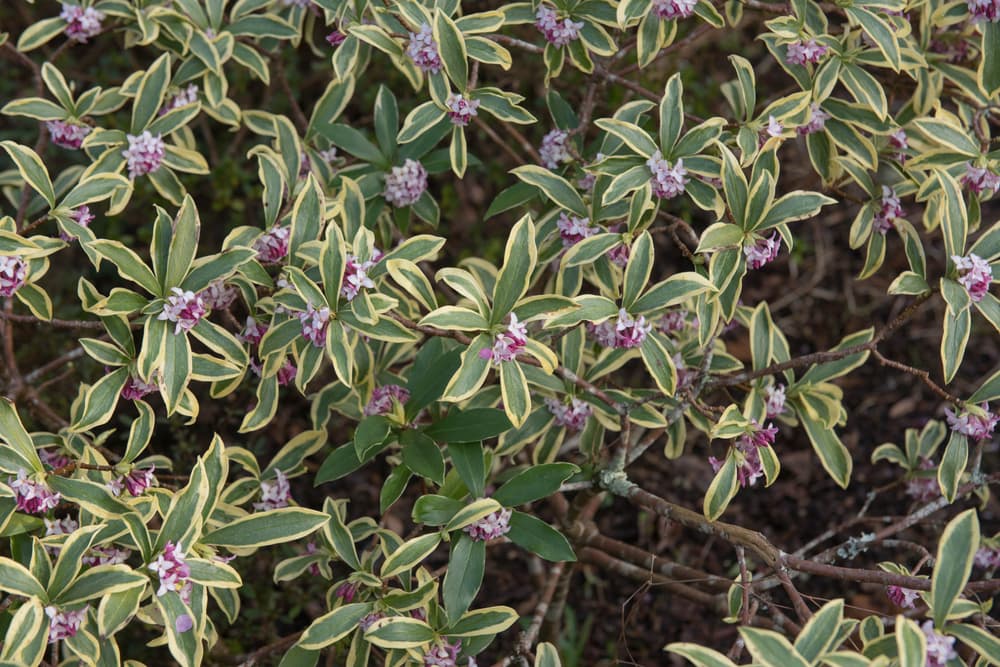
IN THIS GUIDE Overview Common Varieties Planting Daphne Daphne Shrub Care References Daphnes are small or medium shrubs which can work well in many gardens. These are plants that some people believe are fussy and a little challenging to grow, but as long as you understand where they thrive and what they need, you should not find them too difficult. Overview Botanical Name Daphne Common Name(s) Daphne Plant Type Shrub Native Area Asia, Europe & Northern Africa Hardiness Rating H4-H6 Foliage Deciduous / Evergreen Flowers Varies When To Plant March-April When To Prune June-August Daphne is a genus containing a wide range of evergreen and deciduous shrubs. It is in the Thymelaeaceae plant family and is native to Asia, Europe and the north of Africa, and many are grown in gardens and are popular decorative plants.1 Daphne shrubs can vary significantly in size and appearance. Upright species can grow to 1.5m or so in height, while others remain far smaller and will even grow rather happily in containers. Daphne usually flowers in late winter or early spring. Evergreen varieties tend to have greenish-white or yellow flowers, while deciduous types tend to produce pink blooms. However, most types have fragrant flowers, which is a definite added benefit to growing a daphne shrub. Common Varieties Some common daphne varieties to consider include: D. bholua “Daphne bholua flowers in mid-winter which is lovely for bees that are around at that time of year,” shares Sue Fisher, a Garden Designer. Try ‘Jacqueline Postill’ (pictured above) or ‘Darjeeling’. D. x burkwoodii ‘Somerset’ is my favourite Burkwood variety. D. cneorum A top variety is ‘Eximia’. D. laureola D. mezereum D. odora (Grow ‘Aureomarginata’ for lovely flowers). D. x transatlantica Try ‘Eternal Fragrance’ (pictured above) or ‘Pink Fragrance’. Planting Daphne Larger daphne shrubs work well towards the back of a border, while smaller daphne might be positioned more to the front. These are naturally woodland shrubs, which can help inform the position where they will be most at home. Smaller daphne shrubs often work well in rock gardens or alpine houses, but they are fussier types which are a little harder to grow. “To enjoy the blooms and fragrance of your Daphne, I recommend planting it somewhere you will be walking past when it’s in flower,” suggests Horticultural Consultant and Instructor Dan Ori. “Too often, we hide away winter flowering Daphne in borders that only receive our attention in the summer.” Follow these guidelines to plant your young daphne shrubs: Dig a hole which is at least half again as wide as the pot the daphne was in, which is the same depth as the plant’s previous container. Soak the plant and the hole thoroughly, then place the plant in the hole. Turn it to the preferred orientation. Refill the soil or growing medium around the plant. When To Plant Daphnes are best planted out in March or April to get them off to the best possible start. “If you have struggled with getting a Daphne to grow in your garden you could try ‘Jacqueline Postill’ or ‘Aureomarginata’, as I have found these easier to get established,” adds Dan. Daphne Shrub Care Daphne has a reputation for being somewhat challenging to grow successfully, but as long as these shrubs are positioned carefully and not disturbed, they can flower pretty reliably. Here are some notes to help you understand the environmental conditions that these plants require: Aspect & Light Some varieties will be fine in full sun, but others will prefer a position in a dappled or light shade. Growing in the dappled shade below deciduous trees is usually the best option. Preferred Soil Daphnes prefer moist yet free-draining soil which is neutral or alkaline in pH. Moist soil types will suit, but if you have heavy clay soil, it may be better to grow daphne in a raised bed or container. Temperature & Humidity Daphne vary in their tolerance of cold and their winter hardiness. Some are H4 hardy, while some can be quite a lot tougher, with a hardiness rating of H6. While these will all usually make it through the winter in the UK, many will benefit from generous mulching to protect the roots and a cover of horticultural fleece or similar during prolonged periods of cold weather. Growing From Seed Growing daphne from seed is challenging, time-consuming and can often have poor success rates, even for more experienced gardeners. I’d recommend either propagating through cuttings or purchasing daphne plants. Propagating Semi-ripe cuttings can be taken in late summer and usually root fairly successfully. So, if you admire a daphne in a friend’s or neighbour’s garden, this is a good way to obtain one of the same for your own displays. Container Growing Smaller daphne can be grown in containers as long as they are large enough to accommodate the roots. Make sure that the container allows for free drainage, and fill it with a suitable free-draining yet moisture-retentive medium. Watering Water regularly during dry spells, but take care not to overwater. Daphnes are not tolerant of wet and cold roots, or of extreme drought. Remember that plants in pots will need to be watered more frequently. Fertilising Daphnes do not usually require additional fertilisation. The use of enriching organic mulches should suffice to meet their nutritional needs in most cases. Upon planting and each spring, spread a good quality compost or well-rotted manure around your plant. Then, each autumn, add a thick layer of autumn leaves or other carbon-rich mulch to protect the roots. Pruning Daphnes do not usually require any pruning at all. Harvesting a few flowering branches for use in cut flower arrangements will usually suffice. If you wish, you can remove stems for aesthetic reasons in the summer, but this is not often necessary. Common Problems Root rot caused by poor drainage, high rainfall or overwatering is one of the most common issues encountered. Sometimes, this may be caused by environmental conditions alone, though sometimes in those conditions, fungal problems like honey fungus and phytophthora root rot can take hold, as well as other fungal issues and virus infections. References 1. Two members of the family Thymelaeaceae. (2012, March 10). University of Washington Botanic Gardens. Retrieved March 14, 2023, from https://botanicgardens.uw.edu/about/blog/2012/03/10/march-2012-plant-profile-two-members-of-the-family-thymelaeaceae/
Learn more
Dieffenbachia ‘Dumb Cane’ Houseplant Types And Plant Care Guidelines
IN THIS GUIDE Overview Common Varieties Dieffenbachia Plant Care References Dieffenbachia is a large genus of tropical plants, a handful of which are commonly grown as houseplants in temperate climate zones. If you are looking for a particularly low-maintenance houseplant, then there are easier options to grow. However, if you are looking to expand your collection of foliage plants to grow indoors, then dieffenbachia could offer some good options to consider. These houseplants are prized for their large glossy leaves which provide plenty of visual interest even though the plants do not tend to flower in temperate climate cultivation. Overview Botanical Name Dieffenbachia Common Name(s) Dumb Cane / Leopard Lily Plant Type Houseplant Native Area Central & Southern America Hardiness Rating H1A Foliage Evergreen Flowers Rarely seen when grown in the UK as houseplants When To Plant All year round Dieffenbachia species hale from the tropics of Central and South America, where they live in tropical rain forests.1 Since they naturally live in the dappled, sub-canopy shade, they can cope well with the somewhat lower light levels found inside our homes. Common Varieties There are many different species within this genus, but only a handful are typically commercially available for home growers. Some commonly grown as houseplants and available for sale in the UK are: D. amoena D. maculata D. seguine ‘Camile’ D. seguine ‘Reflector’ Dieffenbachia Plant Care Dieffenbachias are not particularly challenging to grow indoors, but are a little fussy when it comes to the specific growing requirements. Preferred Light Dieffenbachia needs a spot with bright but indirect light. The direct hot sun can scorch the leaves and cause brown patches, but too little light can leave the foliage all washed out and plants may grow poorly. Soil Requirements Dieffenbachia should be potted up into containers that drain well and freely, filled with a peat-free loam or soil-based potting mix which is light and aerated. Choose containers just a little larger than the rootball of the plant. Watering Between spring and autumn, water dieffenbachia whenever the top few centimetres of the potting mix feels dry. Make sure that any excess water can drain away freely. In winter, water sparingly. Temperature & Humidity Dieffenbachia are tropical rainforest plants, meaning that they need warm and humid conditions to thrive. Ideally, temperatures should be kept between 18-24°C at all times, and any draughts and extreme temperature fluctuations should be avoided. Wipe the leaves with a damp cloth to keep them dust free and mist them a couple of times a week to maintain humidity. Fertilising Dieffenbachia will appreciate a balanced, organic liquid plant feed once a month over the spring and summer months. Pruning Other than removing the odd leaf that has become damaged or has yellowed, pruning is not generally required. Potting & Repotting Dieffenbachia should usually be repotted in spring every 2-3 years, or once the plant has become root bound within the previous pot. Common Problems The most common problems with dieffenbachias arise because the appropriate environmental conditions have not been provided or because there has been a mistake in the watering routine. Like other houseplants, dieffenbachia can also commonly encounter issues with scale insects, spider mites or mealybugs. Propagating These plants can be propagated by means of division of mature plants. Simply split the plant carefully, making sure that there are roots for each section and repot each division into its own pot. If you have a plant which has grown leggy and tall, you can also cut it down to the desired height. The remaining portion will regrow from the point where it was cut and if you replant the top section that you cut off into a new pot, it should root and create a new plant. References 1. Dumb cane. (2023, February 10). Encyclopedia Britannica. Retrieved March 14, 2023, from https://www.britannica.com/plant/dumb-cane
Learn more
Look No Further Than Hyacinth For Joyful Springtime Flowers - How To Grow Common Types
IN THIS GUIDE Overview Common Varieties Planting Hyacinth Hyacinth Plant Care References If you want stunning springtime flowers for your garden, look no further than hyacinths. The blooms are borne in dense clusters which then open into charming flowers that are like flared bells opening into curvy stars. They occur in bright, popping colours in cool purples, warm yellows, and hot pinks. Overview Botanical Name Hyacinthus orientalis Common Name(s) Hyacinth Plant Type Perennial / Bulb Native Area Eastern Mediterranean Hardiness Rating H4 Foliage Deciduous Flowers Somewhat bell-like and star-shaped face-on, with flared, recurved petals When To Plant September-October When To Prune March-April Hyacinths are most commonly known in tones of blue through violet, but decades of floriculture have resulted in cultivars in rich, deep hues of yellow, orange, pink, and near-red plus white besides more shades in the traditional cool-spectrum colours. Genus Hyacinthus is a member of the Asparagus family, and it includes only three species of which just one, Hyacinthus orientalis, is parent to popular garden cultivars.1 It should not be confused with grape hyacinth, which is a different plant. Though Hyacinthus orientalis is native to the Eastern Mediterranean, these plants have been appropriated by Europe, particularly the Netherlands.2 Each bulb produces several long strap-like leaves of a glossy, bright green hue from the centre of which rises a stalk bearing massed flowers. They are well-known heralds of spring and announce the season with their sweet fragrances that often suffuse the nearby area with heady perfume. Hyacinths, with their densely packed flower spikes, are truly a show-stopping plant. Common Varieties Underneath we run through some of the most desirable common varieties that all bloom between March and April: H. orientalis ‘L’Innocence’ Has pure white flowers that are intensely fragrant. H. orientalis ‘Yellow Queen’ A floriferous variety whose flowers are sometimes light yellow but more often are a rich cream. H. orientalis ‘City of Haarlem’ Bears dense heads of fragrant flowers of a creamy primrose yellow hue. H. orientalis ‘Fondant’ Aptly named because of its bright bubble-gum pink or frosted pink hue, sometimes towards magenta. H. orientalis ‘Jan Bos’ One of the most popular cultivars, producing dense clusters of flowers with a bright pink-red colour that are also intensely fragrant. H. orientalis ‘Blue Festival’ Produces delicate-looking flowers in loose clusters, but unlike most varieties, it sends up two or more flowering stalks. H. orientalis ‘Delft Blue’ Also one of the most popular cultivars with sweetly scented flowers that are a bright purplish-blue. H. orientalis ‘Ostara’ Produces flowers in an unusual shade of purple; a gently glazed, greyish purple. H. orientalis ‘Royal Navy’ Rises to only about 20cm and is a floriferous variety bearing deep blue flowers in dense clusters. Planting Hyacinth Hyacinth bulbs should be planted in the ground pointed side upward at a depth of 10cm so that the pointed side faces upwards. If planting in containers, the best way to do this is to plant the bulb only about halfway into the soil and then add a little more soil around the bulb to the right level. This helps to prevent the bulbs from becoming waterlogged. Gently pat down the soil but do not pack it in. Bulbs should be spaced apart by at least 10cm. When To Plant Early to mid-autumn, specifically September and October, are the best months to plant hyacinth bulbs for spring blooms. Hyacinth Plant Care Preferred Aspect Hyacinths should be sited in full sun. Although a couple of hours of shade is fine, if these plants get too much shade, flowering will be affected. Soil Requirements The best soil for outdoor hyacinths is fertile and loam-based, amended with a little organic content, with an acidic to neutral pH. Soil should not be densely packed and should drain very well. To accomplish this, you may amend the soil with gravel or perlite. The soil must not stay consistently wet as this can bring about bulb rot. Watering Water the plants regularly but make sure not to overwater as hyacinth bulbs are especially susceptible to bulb rot. The soil should remain moist and only be watered again when it has dried out. Reduce the amount and frequency of watering down to about half when the leaves begin to yellow and wither. Continue reducing the amount and frequency of watering, ceasing when the leaves are dead. Fertilising Hyacinths in the open ground need to be fed twice a year. Feed the bulbs in early spring just when the leaves start to sprout with a balanced granular fertiliser to prep the bulbs for the flowering season. In mid-autumn, they should be fed again to replenish the bulb’s energy reserves for the developing embryo. Use the same balanced granular fertiliser and add an equal quantity of bonemeal or other high-potash fertiliser. These fertilisers can be sprinkled on and patted into the soil around 10cm from the bulbs. Hyacinths growing in pots may be fed with a suitably diluted balanced liquid fertiliser. Start in early spring when you see the leaves peeking from the soil and repeat fortnightly. Deadheading When the flowers have withered, the stalk should be cut off from the base. Indoor Growing Hyacinth bulbs are commonly forced for the purpose of getting them to flower indoors during the Christmas holiday season. “Forced bulbs can normally be purchased as garden centres in the early autumn,” shares Master Horticulturist Roy Nicol. To force the bulbs yourself to flower during the desired time, you have to chill them for about 13 weeks at temperatures between 2-9°C. This can be done in a dark room that is suitably cold, a cooler or even the fridge. After bulbs have been thus forced and then planted, they will bloom in about 3 weeks, so, if you are aiming for Christmas Day flowers, you need to get started in the first week of September. If putting hyacinth bulbs in the fridge, do not keep them with fruit like apples and pears, as these will cause the bulbs to lose their vitality.3 After 13 weeks of chilling, plant the bulbs in a pot filled with a loam-based medium. Initially, this should be kept in a cool and dark place but soon after the leaves sprout shifts the pot to a location where it gets indirect light. When the flower stalk emerges, shift it once more to where it will get sun for most of the day. Storing Hyacinth bulbs can be stored in a cool, dry and dark place, such as on a shelf in a cellar. Initially, they should be left to dry out on a newspaper on a flat surface in a cool, dry and dark room for 3-4 days. After they have dried, put bulbs in a mesh bag and place that on a shelf or in a cupboard in a cool and dark place such as the basement or a shed. Keep in mind that you do not have to dig up hyacinth bulbs that are in the ground outdoors Potted Hyacinth bulbs, on the other hand, cannot just be left in the pot and need to be removed and stored. Propagation Though there are several ways of propagating hyacinths, the one that both tradesmen and home gardeners use most frequently is the offset method. When a bulb is removed from the ground after the leaves are dead, you may see 1-2 very small ‘baby bulbs’ attached to the bulb. Gently separate this offset from the bulb by working it loose just where it is growing from the bulb, taking care that neither it nor the bulb is damaged or breaks. This baby bulb should be planted, watered, and fertilised just like the mother bulb but in proportion to its size. It will need this type of TLC for 3-4 years as it grows and develops sufficient vigour to produce proper flowers. It should be said that hyacinth bulbs are not exactly a costly product so instead of going to the time and trouble of growing new plants from offsets, most gardeners simply buy new bulbs. Common Problems A big plus point for hyacinths is that they do not suffer from the usual pests or diseases that affect bulbs or flowering plants. Slugs can sometimes get to them, but these icky garden pests are not difficult to control or kill. The problem is that squirrels, voles, rats, and mice eat hyacinth bulbs. If you face this problem, you can try to deter these pests by fertilising the soil with bloodmeal, wormwood or garlic. Otherwise, the bulbs may need to be protected from rodents with wire netting. Companion Planting Hyacinths are commonly grown and seen as plants for mass plantings and borders, and as beautiful springtime specimen plants positioned close to the home. They are also kept as indoor plants, usually during the holiday season. Hyacinths and other spring bulbs like tulips and daffodils are sometimes used as companion plants for each other. Primroses would set hyacinths off most attractively, with each plant, assuming that the varieties are well-chosen, complementing the other wonderfully well. References 1. Household and Garden Plants. (2006, January 1). Science Direct; Elsevier BV. https://doi.org/10.1016/b0-72-160639-3/50022-8 2. The BRAHMS Project, University of Oxford, Department of Plant Sciences. (n.d.-e). Hyacinthus orientalis. Oxford University Plants. Retrieved March 20, 2023, from https://dps007.plants.ox.ac.uk/bol/plants400/Profiles/GH/Hyacinthus 3. Wallace, G., & Jauron, R. (2017, October 4). Yard and Garden: Forcing Hyacinth Bulbs Indoors During Winter. Iowa State University: News. Retrieved March 20, 2023, from https://www.extension.iastate.edu/news/yard-and-garden-forcing-hyacinth-bulbs-indoors-during-winter
Learn more
Growing Bird's Nest Fern As Houseplants? Don't Ignore These Guidelines
IN THIS GUIDE Overview Common Cultivars Asplenium Care References Bird’s Nest Fern is an attractive evergreen fern commonly grown as a houseplant here in the UK. If you are looking for a lush houseplant for a warm and humid location inside your home then this could be a good plant to consider. It is relatively easy to grow as long as suitable conditions are provided, and can look good within your home throughout the year. Overview Botanical Name Asplenium nidus Common Name(s) Bird’s Nest Fern; Spleenwort Plant Type Fern Native Area Southeast Asia, Eastern Australia, Pacific Islands, India & East Africa Hardiness Rating H1B Toxicity None Foliage Evergreen When To Plant Any time of the year This epiphytic fern is in the Aspleniaceae plant family.1 It is widely referred to as bird’s nest fern, or simply nest fern – a name which it shares with some other Aspleniums. In its native habitat, it can survive either as an epiphyte or terrestrial plant, but usually grows from organic matter.2 It may be found on palms, where it collects water and nutrients in its leaf-rosette. In Taiwan, bird’s nest fern is eaten as a vegetable, often cut into inch-long pieces and stir-fried with garlic and chillies.3 However, in the UK, it is commonly grown as an ornamental houseplant, prized for its long crinkled fronts. Common Cultivars Asplenium nidus has a Royal Horticultural Society Award of Garden Merit. There is not a huge range of different types, but there are a few cultivars which differ from one another in their leaf shape. ‘Antiquum’ Has wavy, edged leaves. ‘Crispy Wave’ Has ruffled, sword-like leaves. ‘Osaka’ Has narrow leaves with rippled edges. ‘Victoria’ Has wavy, long, tongue-shaped foliage. Asplenium Care These ferns will usually be happy as long as you provide them with the conditions they need. Soil Conditions These plants thrive in a moist but well-drained growing medium with added grit. The RHS recommends a mix of loam, coarse leaf mould or coir and charcoal for optimal results, but a typical peat-free compost of good quality with added grit can also work well. The mix must be rich in organic matter and have excellent drainage that will still retain sufficient moisture. Light A. nidus requires bright but filtered light so should be placed out of direct sunlight which can burn the leaves. An east or north-facing window can be the ideal place for one of these houseplants within your home. Watering This fern needs a moderately moist growing medium, but it will not do well if left sitting in waterlogged conditions. You should water well whenever the top 2cm of the potting mix is dry. Make sure you direct the water where it is needed and avoid aiming water at the centre of the rosette as, if water lingers there at the centre of the plant, this can cause fungal issues and rot. Temperature & Humidity Bird’s nest ferns will thrive in temperatures between around 15-25°C, though they can tolerate temperatures down to around 10°C. Make sure that your plant is protected and is not subjected to colder temperatures, especially for prolonged periods. Creating a suitable humid environment is also important and these ferns will thrive in a high-humidity location, such as a bathroom or kitchen. If you cannot provide this, then you will need to mist the plant regularly to ensure that humidity is high enough for these plants to thrive. Fertilising It is a good idea to feed bird’s nest ferns with a balanced, organic liquid feed (such as a compost tea) diluted to half-strength to avoid any nitrogen burn. This feed should be used every month or so when watering your plant throughout the growing season which is usually between April and September. Make sure that you do not apply the feed to the leaves but directly into the soil, as direct contact can damage the leaves. Common Issues Fronds naturally turn brown and are replaced over time with fresh foliage as this is a natural part of the plant’s life cycle. However, browning foliage may also be due to drafts or drying. If leaves turn yellow, this can be a sign that you have applied too much fertiliser or a sign that the foliage has been damaged by direct sun. Typically, bird’s nest ferns are not particularly prone to pest or disease problems, though they can have some issues with pests like scale insects with which houseplant owners may well be familiar. However, growing these plants organically is particularly important, since the leaves are very fragile and can be damaged by products like chemical pesticides, and you should also be very careful not to touch the new fronds that form, as they can be damaged very easily. Propagating The propagation of ferns like this is not the easiest job for novice gardeners. The plants propagate not by means of seeds but through spores, which form like fuzzy spots on the bottom of the fronds. However, if you would like to give it a go, cut a frond with natural fuzzy spots and place it in a paper bag. The spores will drop into the bag and a couple of days later, you can take those spores. Place them on top of some moss in a dish of water, keeping the moss moist but not waterlogged and put it in a shaded spot. New plants should appear within a few weeks. References 1. Simpson, M. L. (2019b). Evolution and Diversity of Vascular Plants. Elsevier EBooks, 75–130. https://doi.org/10.1016/b978-0-12-812628-8.50004-3 2. Asplenium nidus. (n.d.). Ferns of Sulawesi. Retrieved March 9, 2023, from https://sulawesiferns.myspecies.info/taxonomy/term/7634/descriptions 3. (2020b, March 4). Ferns on your plate. Taipei Times. Retrieved March 9, 2023, from https://www.taipeitimes.com/News/feat/archives/2016/01/09/2003636762
Learn more
Keep Penstemon Seeds In Cold Storage For 3 Months Before Sowing, Say Experts
IN THIS GUIDE 1) Prepare Seeds 2) Sow Penstemon & Cover Lightly 3) Prick Out & Pot On 4) Harden Off Before Planting Out Penstemon are not native to the UK, but can still be useful plants for native wildlife nonetheless. Of course, they are also attractive flowering plants that can look wonderful in a range of settings. If you would like to grow penstemon, the most usual approach is to purchase the plants in spring or early summer to place in your garden. However, it is also possible to grow penstemon from seed. To grow penstemon in this fashion: Collect or purchase the penstemon seeds and prepare them for better germination. Sow the seeds in spring, in a propagator at temperatures of around 15°C. Prick out the seedlings and pot on when they are large enough to handle. Plant out any time between March and October. Difficulty Easy / Medium Equipment Required Seeds, seed tray or pots, growing medium, propagator 1) Prepare Seeds The first thing to think about is whether you are planning to collect seeds from an existing penstemon plant or you are going to buy some seeds. If you are purchasing seeds, these may already have been stored for a while, and germination rates can be increased by this period of storage, which mimics the natural cycles of the plant. Hardier penstemon varieties can be directly sown where they are to grow as soon as they are collected from the plant. However, you will usually get better results if you store the seeds in a cold location over winter. A period of 3 months in cold temperatures can increase the germination rates with penstemon seeds. “You can normally achieve this cold stratification by placing seeds in the fridge for a few months, but make sure they are kept free from moisture,” says Dan Ori, a Horticultural Consultant. “One or two species will benefit from colder temperatures and you can place them in the freezer for 4-6 weeks, but I advise trying this with a few seeds first to check the type you have picked survives this deep freeze.” You can also store the seed you collect for several years before planting, as this period of maturation may also improve germination rates. With some varieties, scarification to remove the coating of the seed can sometimes be a good idea and can help break dormancy in trickier penstemon species. How complicated and challenging it is to grow penstemon from seed certainly depends greatly on which particular type and variety you are trying to grow. 2) Sow Penstemon & Cover Lightly In the UK, it is best not to directly sow in autumn but rather to sow indoors during spring. The best results will be achieved if, after cold stratification, the seeds are sown into trays in a propagator with the temperature set to 15°C. Scatter the seeds in the top of a seed tray filled with peat-free seed compost, then cover them over lightly with a little more compost on top. 3) Prick Out & Pot On As soon as the leaves emerge and have grown a couple of pairs of true leaves, you should prick them out and pot them on into their own individual containers. “Always handle seedlings by a leaf, not the stem, as young plants can grow new leaves if damaged but will rarely grow a new stem,” says Dan. 4) Harden Off Before Planting Out Remember to harden off indoors grown plants to get them acclimatised to outdoor conditions. Then, you can plant the penstemon you have grown into your garden anytime between March and October – though I’d say spring is best. If planting later in the year, it is crucial to stay on top of watering needs, especially during hot weather.
Learn more
Penstemon Pruning: 'Cut Back Half Of The Stems In A 'Chelsea Chop' For More Flowering'
IN THIS GUIDE 1) Cutting Back 2) Deadheading 3) Hard Pruning Penstemon is a genus of herbaceous perennials that produce an abundance of floral colour in spring and summer. They are low-maintenance semi-evergreens with a clear majority having hardiness ratings of H4 or greater, meaning they are hardy enough for most regions of the UK. Nearly all of the hundreds of varieties produce a profusion of dainty tubular or bell-like flowers on spikes or in clusters which will be even more profuse and bloom more reliably if you prune and deadhead these plants correctly. I lay out my recommendation as to the best practice for pruning penstemon in this guide, which includes: Cutting back Deadheading Hard pruning These phases (and whether each is necessary) are explained in more depth below. Difficulty Medium Equipment Required Gardening gloves, secateurs or hand shears When To Prune March or November 1) Cutting Back If your Penstemon variety has a hardiness rating of H5 and you’re located in the more southernly regions of the UK you can cut back in autumn. However, if your variety is hardy only to H3 and you’re up in the Midlands or above, wait until spring before cutting back as its dead foliage will help to protect the plant during winter. We suggest you err on the side of prudence. So, in late autumn or the beginning of spring, cut back the dead flower stalks and any faded and withered foliage to the base, making sure that you do not at any time remove green foliage. 2) Deadheading After the flower stalks start to bloom from mid-spring, blooms will begin to fade on any given stalk. If you have the time, pinch off the faded flowers to continually spruce up the plant. Better yet, wait until a majority of blooms on a stalk have withered and then deadhead by cutting back that stalk by half or to just above the uppermost leaves or lateral stems on that stalk. Doing so will spur fresh flowering growth. 3) Hard Pruning After the summer flowering season is nearing its end in late June, consider a hard prune. Cut down all flower stems that are either spent or fading to the base, leaving all the foliage intact. This will trigger renewed growth and, with luck, you will see another flush of blooms in early autumn. If your plant is still going strong in late June then give the hard prune a miss and enjoy the show! “Pruning your summer and autumn flowering perennials relatively hard in May during the week of the RHS Chelsea Flower Show is called the Chelsea Chop,” shares Dan Ori, a Master Horticulturist. “To Chelsea Chop your Penstemons you can cut back flowering stems by half. This chop will result in a delay in the flowering and a more compact plant. “Alternatively, if you can’t quite bring yourself to do that, cut back half of the stems by half, this will reward you with a longer flowering period.” Regardless of your gardening skills, penstemon is a great choice for bringing a laid-back charm to the garden. You can amplify this charm and keep it going for many years if you devote some time and energy toward the proper maintenance of this semi-evergreen perennial.
Learn more
Courgette Plants At The End Of Season Are Good For Compost - Don't Collect The Seeds
IN THIS GUIDE Removing For Space Composting Old Plants Other Uses Your courgette plants will stop producing at the end of the growing season once the first frosts arrive. Before they do, you can consider letting a mature fruit grow to produce seeds that you might sow next year. Remember that they can cross-pollinate with other courgettes, squash, and cucurbits, so they won’t come true from seed. “Collecting seed from F1 hybrids should be avoided as poor quality plants result from open pollination of these plants,” advises Roy Nicol, a Master Horticulturist. With that being the case, once the colder weather arrives and your plants begin to die back, you may be wondering what to do with your courgettes at the end of the season. In this guide, we share some reasons for the removal of courgette plants and several ways you can make use of the dead plants in your garden. Removing For Space I often remove courgette plants from my garden before they begin to die back and sometimes when they are still productive. The reason for this is that I grow my courgettes in a polytunnel where space is often limited. Because of this, I sometimes clear out some summer crops a little early so that I can grow plants in this space over the winter months too. After this, I add the dead plants into my composting system. Composting Old Plants Whether or not you should compost courgette plants depends on whether they are healthy or not. If the plants show signs of diseases like mildew, then it is not always a good idea to add them to your composting heap, as this may increase the spread of diseases throughout your garden. It may also be a bad idea to compost a plant with a bad bug infestation since the bugs might overwinter in the soil or in your compost heap and cause problems in your garden next year. If, however, your plant is healthy and not showing any signs of pests or disease, then you can certainly compost the leaves and stems of your plants. There are several different ways in which you can allow your courgettes to break down and return their nutrients to the system. One idea is simply to add them to your composting heap or bin. It is a good idea to chop up the stems on larger plants so that they break down more quickly. However, chopping and dropping and then leaving the plant material to compost in your vegetable garden can also be beneficial for a couple of reasons. The soil in your garden should never be left bare over the winter months. To protect it from nutrient loss and erosion and to maintain a healthy soil ecosystem, adding mulch, like old, chopped courgette plants, in autumn is an excellent idea. You can then replenish this with compost or other organic matter before planting in the spring. Other Uses If you keep chickens in your garden, then give the old courgette plants to your chickens. They won’t just enjoy eating any green leaves, but can also pick off any pests that might remain. If plants are diseased then I recommend burying these in a hole or trench in a part of your garden that is as far removed from your food-producing areas as possible. Planting comfrey or other plants that can be chopped and dropped nearby means you can still regain the nutrients for your edible garden by utilising this as mulch – without worrying about pests or diseases.
Learn more
Why Tomatoes Aren't Worth Overwintering: Here's What To Do At The End Of Season
IN THIS GUIDE Overwintering Old Plants Can You Compost Old Tomato Plants? How To Dispose Of Diseased Plants Tomato plants will only remain productive for so long in a British garden, and at the end of the growing season, the plants will usually begin to die back. Though these are perennial plants in warmer climes, when growing outdoors or in a polytunnel or greenhouse in the UK, they are typically treated as annual plants. Many new gardeners wonder what to do with old tomato plants once they have finished harvesting their fruit. Overwintering Old Plants If your tomato plants are still in peak health, green and lush looking, then there is the possibility that you might be able to overwinter those plants in a greenhouse or in a light, bright spot inside your home. To do so, you will need to either take your tomato plants and place them in a frost-free and bright location that remains above 5°C. Care for the plant over winter by keeping the medium moist. Tomatoes will not fruit over the winter, but the plants will be sturdy and get off to a good head start in spring if cared for correctly. You can either use overwintered plants for cuttings or grow them to produce fruit once more the following year, though the former is generally more effective. “I would not recommend trying to overwinter tomatoes, as seeds germinate quickly and easily,” explains Horticultural Consultant Dan Ori. “The longer you keep tomato plants in colder and wetter conditions, the more likely you will be to have blight and mould issues that you carry into the next growing year.” Can You Compost Old Tomato Plants? There is one big question when it comes to dealing with old tomato plants that you are not overwintering – to compost or not to compost. The answer to this question depends on two things: The health of your old tomato plant. The composting method you use. If your plant has any signs of pest infestation or disease, then it is not a good idea to add it to your general composting system. Tomato plants can often succumb to a range of fungal and bacterial diseases, so composting your plants can often spread those fungal or bacterial diseases around other parts of your garden and transmit them to other plants. If your plant is healthy and shows no signs of disease, then you can consider adding it to your composting system. However, whether or not it is a good idea to do so will also depend on which type of composting you do. If you have a typical cold composting heap or bin, one thing to note is that thick stems on a tomato plant can take a long time to break down. Another thing to remember is that seeds can remain viable in the finished compost which can lead to small tomato plants popping up all over the place. So, if you do decide to compost in a typical cold composting home composting system, make sure you chop up the stalks well before adding them and avoid placing any fruits with seeds into the heap. If you have a proper hot composting system, where temperatures get much higher within the compost, then you can compost old plants – seeds and all. How To Dispose Of Diseased Plants The most ecologically sound and sensible way to dispose of plants that have signs of fungal or bacterial infection is to avoid adding them to your general waste bin. Instead, you should dig a deep hole in a corner of your garden and bury your old plant materials, where they can break down below the soil and return their nutrients to the soil. As long as this trench or hole is not where you want to grow your vegetables in the future, diseases will not typically be an issue. Plant comfrey or another plant nearby that is good at gathering nutrients from the soil and you can chop and drop its leaves as mulch, taking advantage of the nutrients the old tomato plant contains.
Learn more
Pruning Or Deadheading Crocosmia Isn't Needed Until The End Of Season, Says Mark Wash
IN THIS GUIDE When To Prune Crocosmia 1) Wait For Foliage To Die Back 2) Cut Back Dead Foliage Crocosmia is a very easy plant to grow and care for. As long as it has moist yet free-draining soil and a sunny or lightly shaded spot, it should thrive and flower well for a number of years with very little work on your part. Though not strictly essential, it can be beneficial to cut back dead foliage from crocosmias before new growth emerges in the spring. You can prune crocosmia by: Waiting for the foliage to die back. Cutting off dead foliage to the base. Read more about this simple process below. Difficulty Easy Equipment Required Secateurs, gardening gloves When To Prune March When To Prune Crocosmia The most important thing to remember when cutting back crocosmia is that you should never do so while the leaves are still green and in active growth. After the plant flowers, usually between August and October, the plant leaves still have an important job to do. They are busy and hard at work, converting sunshine and carbon dioxide into energy. When the leaves begin to die back at the end of the growing season, the energy they collected will be stored in the corms over the winter, allowing new growth and flowering the following year. If you cut back the Crocosmia before the leaves have been able to do their job, there will not be enough energy stored in the corms to allow the plant to grow and flower well next year. As soon as the leaves naturally die back, you can think about cutting off the dead, brown leaves to tidy things up and for appearances. However, it is far better to wait until early spring to cut back the plants, as Mark Wash from Trecanna Nursery, states: “No pruning or deadheading is required until the cut back at the end of the season,” he says. If you wait until early spring, shortly before new growth emerges, wildlife will be able to make use of the cover, shelter and habitat that the dead foliage provides over the coldest part of the year. Waiting until spring will also give the corms below a little extra protection, which can be a good thing, especially in colder parts of the UK. So, if you want to have a wildlife-friendly garden and ensure no winter damage takes place in colder areas, hold off pruning crocosmia until around March. 1) Wait For Foliage To Die Back As mentioned above, it is best to hold off cutting back the dead foliage until the early spring. “A gentle shake of the stems will help loosen any spent flowers to keep the clump looking fresh,” says Mark, though this step is completely optional. However, you can cut back hard any time after the foliage dies. You will be able to tell when the foliage has died back because it will have turned a brownish colour and no portions will be green. 2) Cut Back Dead Foliage This job really could not be simpler: just take a pair of secateurs and a hold of a clump of the foliage and cut it off close to the ground. Once you have removed the foliage, it will make a great addition to your composting system. “Depending on the state of decomposition of the foliage (i.e., not too slimy), it can be cut back into small sections and left on the ground around the plants,” shares Horticulturist Colin Skelly. “This allows the foliage to rot down directly on the soil and provides a surface mulch – this can be done with other perennials too.” After pruning, you can also consider replenishing the mulch around the base of your plants with fresh homemade compost or other organic material to maintain fertility and help make sure that the plants have what they need to flower well later in the year.
Learn more